Slab leak detection in Temple City
Investigate the loss, narrow down the affected supply line and discuss the evidence before access work.
Best for a suspected leak that has not been located.
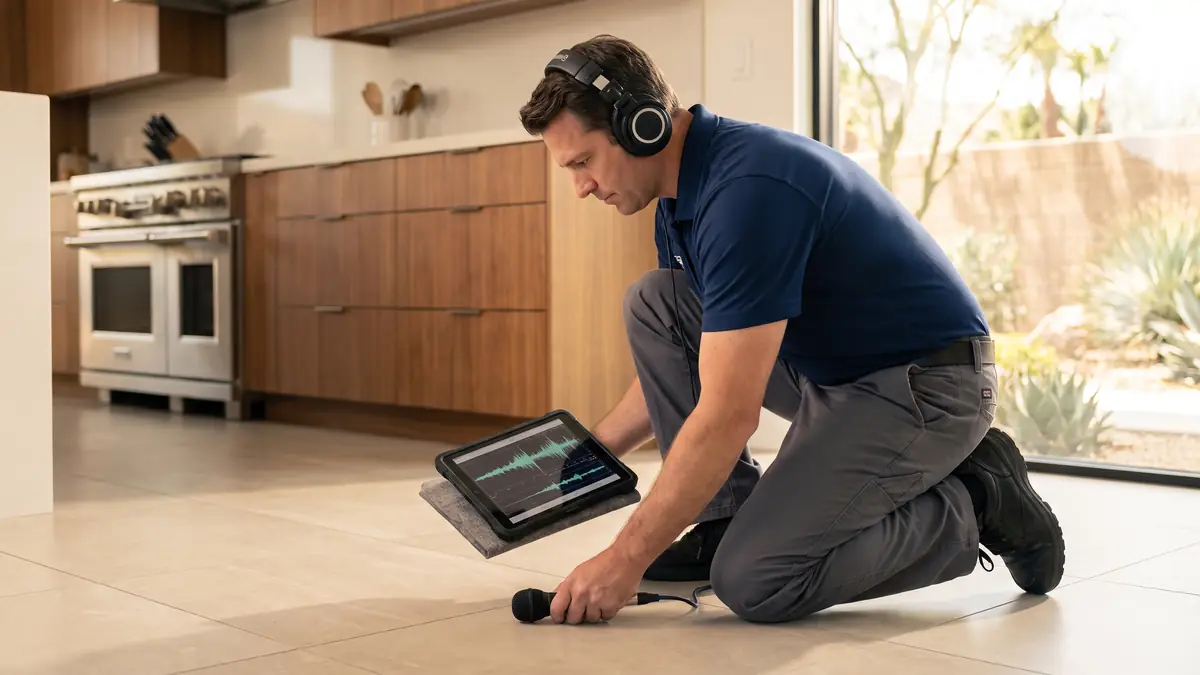
Need slab leak detection in Temple City, CA? We connect homeowners with independent local plumbers to investigate hidden water-line leaks. Confirm the visit fee and availability, then get the findings you need to choose a repair.
Discuss the evidence and proposed opening before authorizing floor work.
Confirm the visit fee, repair scope and any exclusions.
The attending plumber is responsible for the work and its warranty.
Water supply lines beneath concrete; ask separately about drain or sewer testing.
Temple City's inspection request process needs a permit number, job address, inspection type and contact details. If a slab-leak investigation is likely to lead to construction, identify the owner and person who can provide interior access at the outset. The detection findings should describe the suspected pipe and the area affected, making a later repair scope easier to coordinate. Bring any earlier plumbing plans and note whether the meter continues to move with water uses off. The diagnosis should precede decisions about opening concrete or rerouting the supply.
Discuss your leakInvestigate the loss, narrow down the affected supply line and discuss the evidence before access work.
Best for a suspected leak that has not been located.
Compare access methods and replacement routes using the findings from the detection visit.
Best when the failed line and likely location are established.
The plumber selects the tests for your system and explains what they establish. The combination of tests depends on the plumbing layout and access.
The plumber checks the water-use pattern and accessible fixtures. Toilets, irrigation and visible pipe leaks need consideration before the concrete floor becomes the focus.
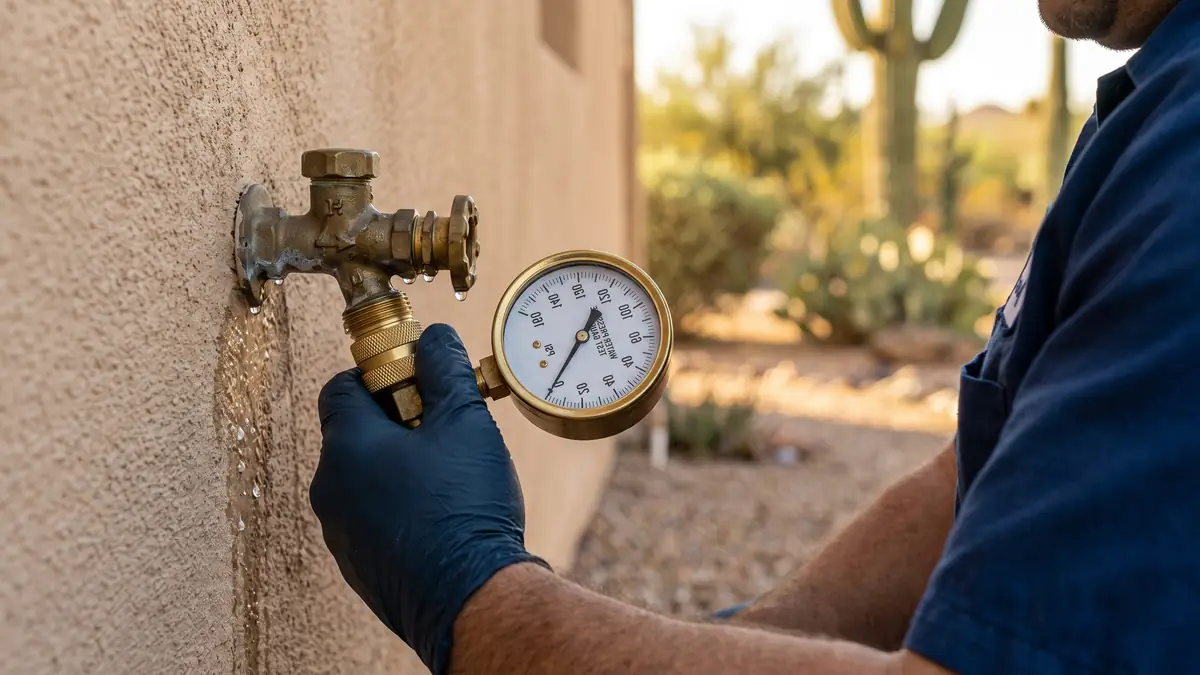
A controlled test checks whether the isolated supply line holds pressure. The plumber selects a test setup and duration suited to the plumbing and the suspected fault.
Testing each side helps narrow the investigation. This is work for the attending plumber; you do not need to operate water-heater valves before calling.
Where accessible isolation points allow it, testing individual runs reduces the area that needs closer investigation. Concealed connections can affect how far the system can be isolated.
Acoustic equipment helps trace escaping water. Floor finishes, background noise and pipe access can influence the readings, so a single sound is checked against other findings.
A thermal camera can show surface-temperature patterns from a hot-water leak. It does not see through concrete or establish the pipe condition by itself, and cold-side leaks need other evidence.
Ask the plumber to identify the affected line, explain how the location was established, and provide written findings or a marked area where appropriate. Confirm any remaining uncertainty before approving access work.
Note when the symptom happens and whether water-using fixtures or appliances are operating. Different faults can create similar warning signs.
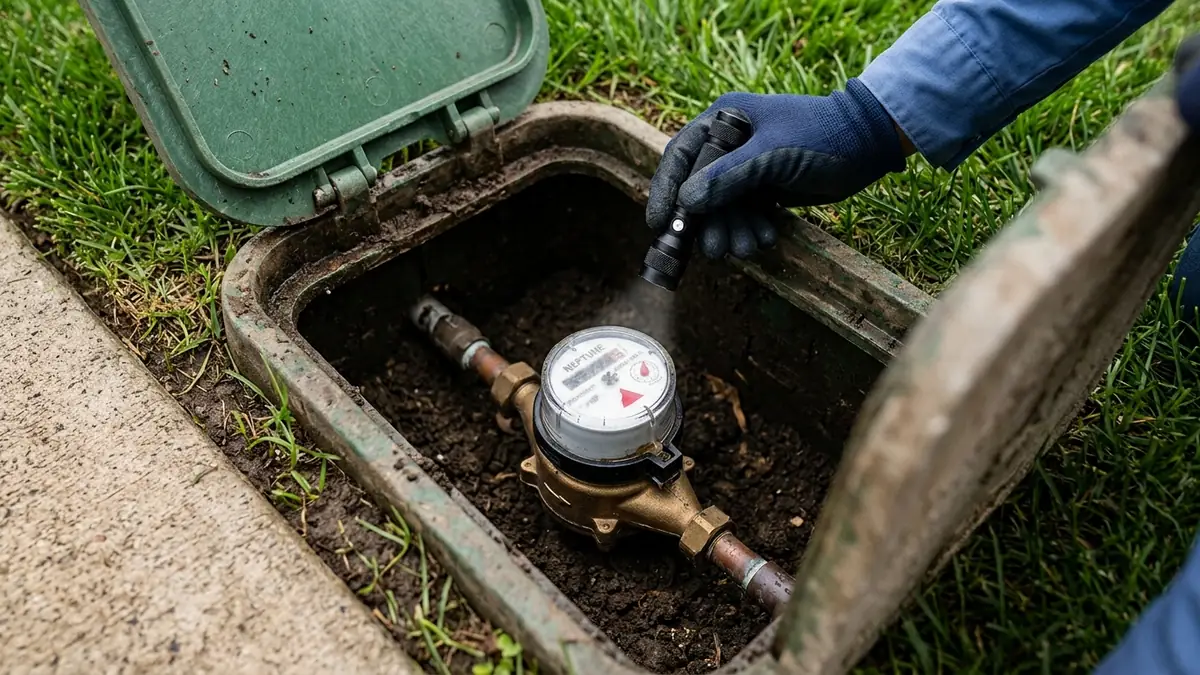
Compare the usage units and billing period, then check accessible fixtures and irrigation as well as the house plumbing.

A hot-water leak is one possibility. Sunlight, heating and other temperature sources need consideration too.
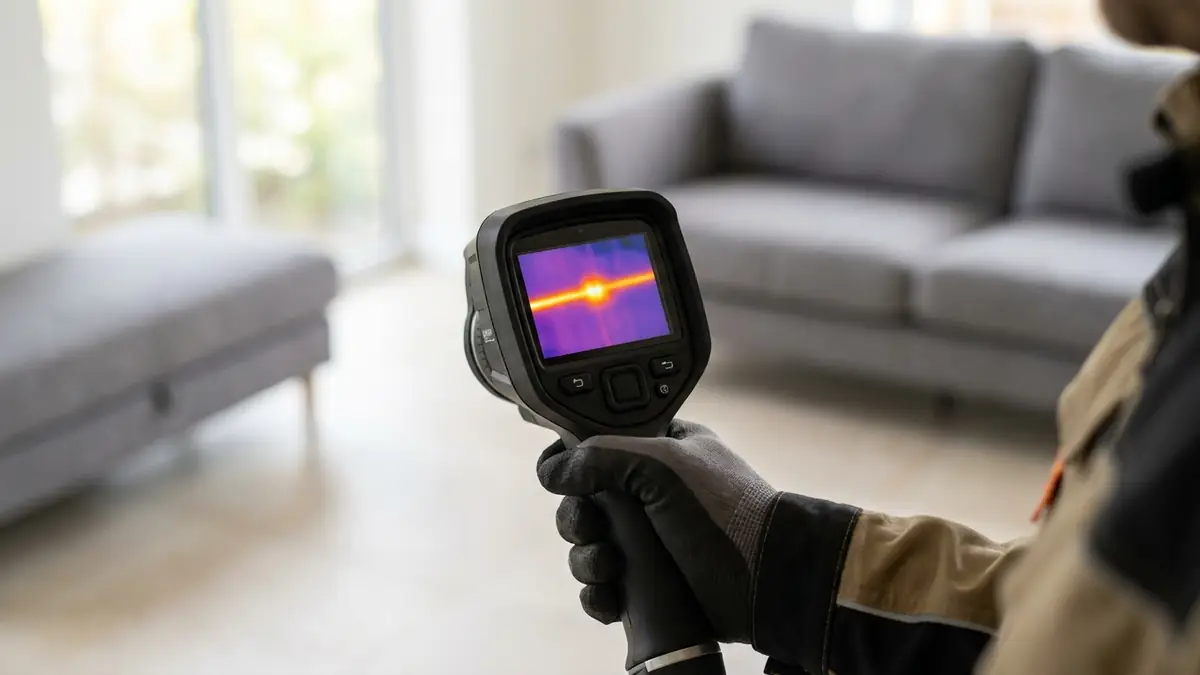
A thermal scan may reveal a surface-temperature pattern useful in a hot-side investigation. It needs to agree with other test results.
Tell the plumber where it first appeared and whether it changes after water use. Moisture may travel before it becomes visible.
Explain which fixtures are affected and any recent plumbing work. Those details help direct the first checks.
Note the location and time. Sound can travel along pipes, so the loudest point is not a confirmed repair location.
If water is affecting the floor, arrange an assessment promptly and discuss safe water isolation with your supplier or plumber.
Use $150–$400 as a planning range for slab leak detection in Temple City, CA, rather than a confirmed local quote. Ask the provider about test scope, access, written findings, extra time and any repair credit.
These estimated ranges are for planning. Confirm current fees, availability and inclusions with the provider before booking.
Ask whether the findings identify a hot or cold supply line, and whether accessible fixtures and other water uses have been considered.
Have the plumber explain the test results, likely access point and any uncertainty. Keep the findings available when comparing repair options.
Confirm whether the appointment ends with diagnosis or includes repair planning, and whether reports or a return visit cost extra.
For a property in the Temple City area, give the street address and leak symptoms when calling. Coverage is checked for the actual address and job; a ZIP listing does not guarantee a slab-leak appointment. The following ZIPs identify candidate postal coverage, including any mailing-only ZIPs; they are not municipal boundaries.
Call with your symptoms or report and discuss the appropriate next step.
Call (774) 252-0684Confirm the scope with the attending plumber before booking. A supply-line investigation may include meter review, pressure and isolation tests, acoustic work and thermal imaging where useful. Ask whether written findings, a location mark and any return visit are included.
No. It shows water passing through the meter, which may come from a fixture, irrigation, a supply-line leak or another water use. The plumber needs to isolate the cause before recommending floor access.
Yes. A cold-side investigation relies on isolation, pressure testing and suitable locating equipment rather than a warm patch. The exact method depends on access and the plumbing layout.
Temple City's inspection request process needs a permit number, job address, inspection type and contact details. If a slab-leak investigation is likely to lead to construction, identify the owner and person who can provide interior access at the outset. The detection findings should describe the suspected pipe and the area affected, making a later repair scope easier to coordinate. Bring any earlier plumbing plans and note whether the meter continues to move with water uses off. The diagnosis should precede decisions about opening concrete or rerouting the supply.
Confirm how the provider handles detection-only visits and whether any diagnostic fee is credited toward repairs. Ask for the findings and repair options before deciding on the next stage.
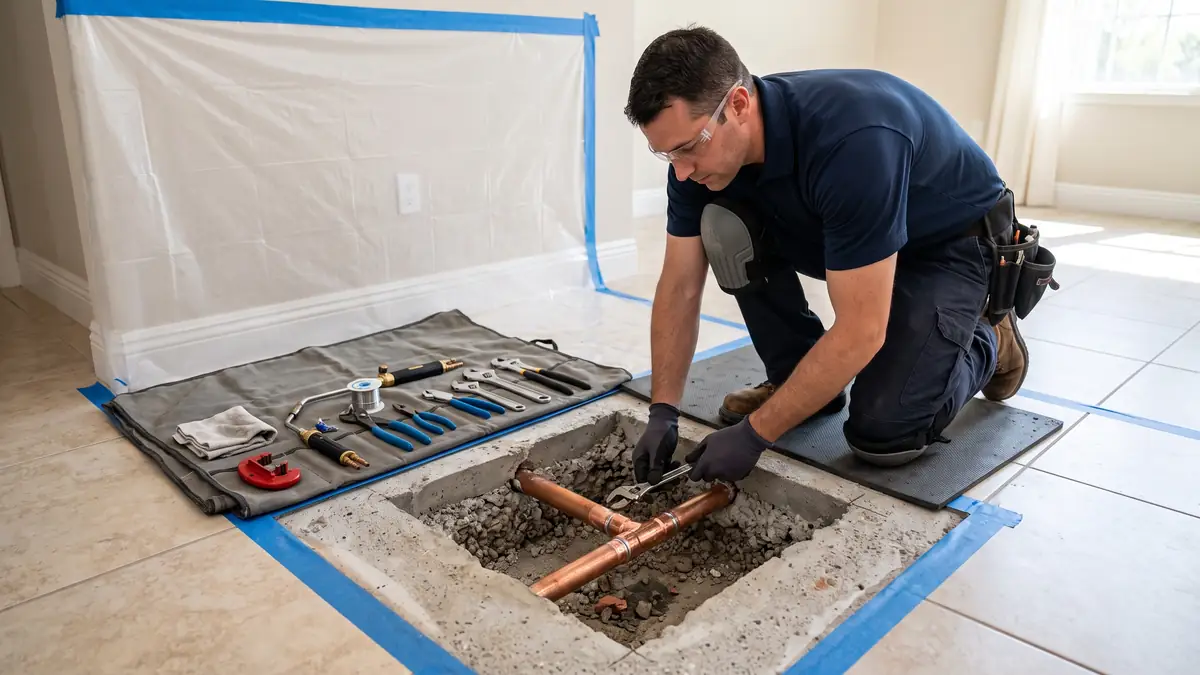
Have the property address, symptoms and any previous report ready. The provider confirms next steps.
Temple City, CA. Give your full street address, leak type and any diagnostic findings. Confirm job suitability, current fees and appointment availability with the provider.
More service areas
Describe the symptoms and ask about the visit fee.